Table Of Content
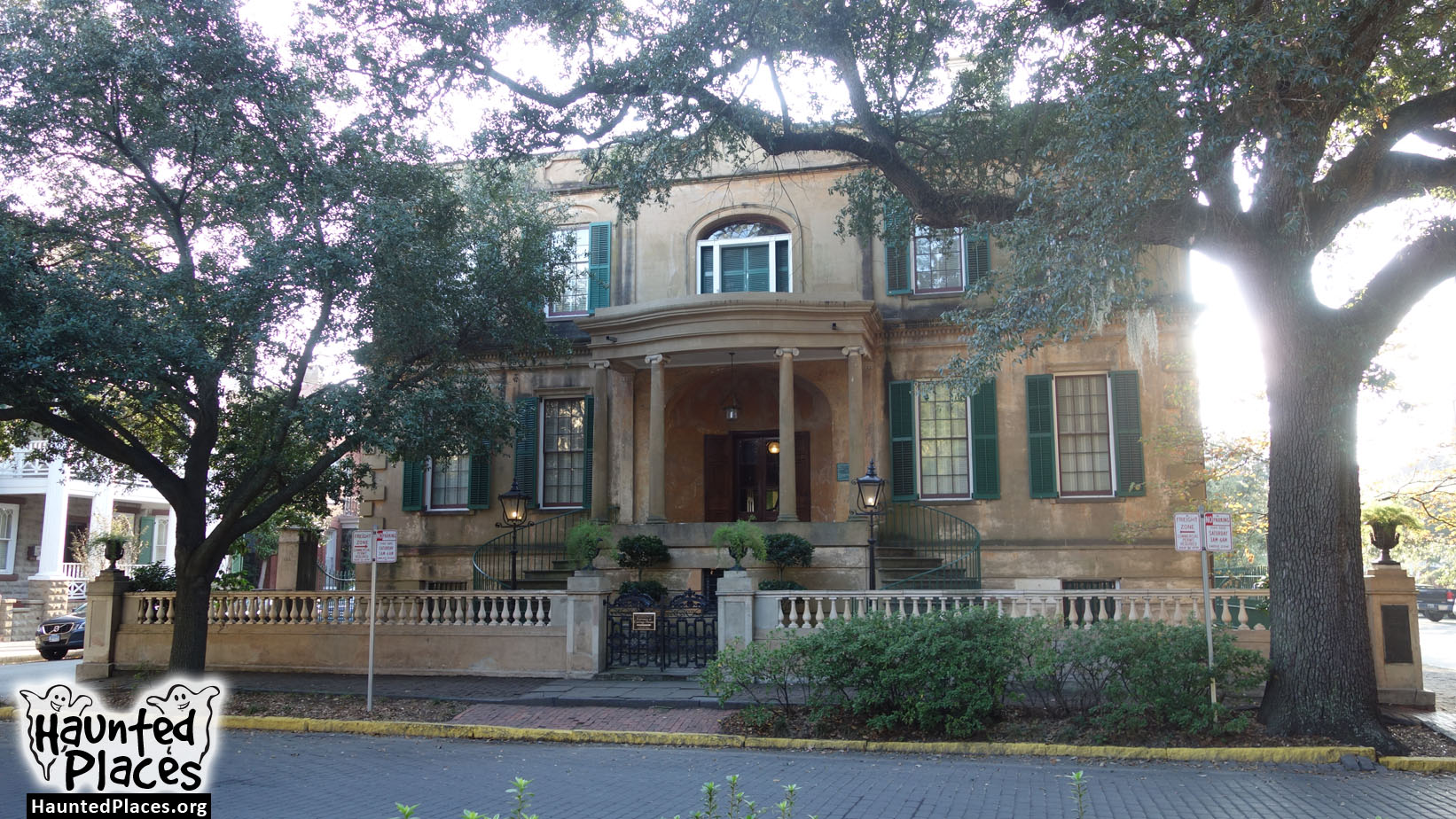
Designed by the English architect William Jay of Bath, the house plans were drawn while Jay was still in England. He sent architectural elevations to local workers before his arrival in Savannah sometime after foundations were laid. According to Jay's letters, the house was to be aesthetically compatible to Bath. This is evident in the Bath stone of the house's construction as well as its sophisticated architectural detail. The Richardson House, as it was originally known after its first owner and builder, Richard Richardson,[7] is North America's preeminent example of period English Regency architecture.
Suzanne Jackson in conversation with Alonzo Davis
He also owned several houses in Savannah and plantations in north and south Georgia and St. Catherine’s Island where he enslaved over 400 people. Jay’s design innovations include unusual room shapes, columnar screens, niches and demilunes for statuary—and even bolder schemes. In the seven years that Jay was in America, he worked in Charleston and Columbia, South Carolina, as well as Savannah. In addition to the Richardson and Telfair houses, Jay designed homes for the Scarbrough and Bulloch families. Jay also designed the Savannah Theatre on Chippewa Square and the Savannah branch of the Bank of the United States. This most important and architecturally significant house was begun in 1816 and completed in 1819.
Museum
For a brand-new three-story mansion in Brentwood, and he’s hoping for as big a crowd as possible. After slavery was abolished in 1865, the building was rebranded as "servant quarters," while still housing many of the same formerly enslaved individuals. Freedom was not enough as the abuse and lack of education had crippled their autonomy.
For Black tour guides in Savannah, the historical is personal - The Spokesman Review
For Black tour guides in Savannah, the historical is personal.
Posted: Sat, 05 Dec 2020 08:00:00 GMT [source]
For a ‘bizarre thrill,’ visit an open house at an L.A. mega-mansion. Here’s how, even without mega-bucks
On March 19, he is believed to have addressed a throng of enthusiastic Savannahians from the unusual cast-iron veranda on the south facade. Guides do a very good job of describing what life was like during the time the Owens Family lived here. They work hard to bring alive the lives of the slaves as well as the enslavers. I had a very unpleasant experience at the Owens-Thomas House and Slave Quarters tour. I didn't realize there were stairs (steep stairs) on the tour and after a long day of sightseeing in Savannah I ... The Owens-Thomas House & Slave Quarters was designated a National Historic Landmark in 1976 and was listed in the National Register of Historic Places in 1977.
Private Spaces
Every element in the main home required maintenance, and the grander the decor, the more slave labor was needed. The silver and china were looked after with extreme care by the family's enslaved butler, who also prepared the meals. The symbol of wealth that was a carpeted room required weekly cleanings that involved it being taken apart, beaten, steam cleaned, and reinstalled.
Los Angeles CA Real Estate
The southwest chamber on the second floor was probably used as a bedroom by the Richardson and Owens families. Today it is called the Lafayette bedroom, for it is used to display Lafayette memorabilia. The room was dedicated in March 1960 to commemorate the Marquis’s visit to Savannah with his son.
Its significance, however, does not lie in its appearance but rather in the events that unfolded within its walls. The dwelling was once home to many living in perpetual servitude, some who remain unnamed, and whose stories we are just beginning to discover. While often regarded as an architectural gem, the home is, in fact, an embodiment of inequality, a manifestation of humanity's perceived differences, and the antiquated views of the antebellum south.
Cemetery Tours
The Owens-Thomas House & Slave Quarters sits off Oglethorpe Square in Savannah, Georgia, about a half-mile from River Street, the famously cobbled street teeming with tourists. It is part of the Telfair Museums group, which includes the Telfair Academy and the Jepson Center. The house and its outbuildings were constructed by enslaved laborers in 1819 for merchant Richard Richardson. After the house changed hands several times in the 1820s, in 1830 attorney and politician George Welshman Owens purchased the home. The property remained in the Owens family until Margaret Gray Thomas, a granddaughter of George Owens, donated it to the Telfair Museums upon her death in 1951.
Owens-Thomas House tells the untold stories Community Savannah News, Events, Restaurants, Music - Connect Savannah.com
Owens-Thomas House tells the untold stories Community Savannah News, Events, Restaurants, Music.
Posted: Wed, 14 Nov 2018 08:00:00 GMT [source]
Architecture and Interior Design
This is where the Marquis de Lafayette stayed when he visited Savannah in 1825. We put out the sold-out notices as soon as we reach our capacity for the day, so if you haven’t already checked in at the ticket booth to receive your tour time, we unfortunately don’t have the capacity to accommodate you today. While we’d love to allow as many visitors as possible to experience this site, we have limited visitor entries each day to help preserve the historic integrity of the buildings themselves. Telfair celebrates Richmond Barthé (1901–1989), one of the foremost sculptors of the 20th century. A passion for art carried Barthé from his youth on the Mississippi coast and in New Orleans to Chicago, where he discovered his genius for sculpture, and then to New York City.

The parterre style garden occupies the space between the main house and the carriage house. This area originally functioned as a work yard, which likely included a small kitchen garden, areas to dry laundry and clean rugs, and perhaps pens and coops for small livestock and chickens. The formal dining room, to the north of the entrance hall, is the largest room in the house.
In its entirety, the Owens-Thomas House features beautiful expensive details, with the formal dining room being the home's most luxurious space. The large dining area has a unique, rounded shape, mahogany furnishings, and intricate plasterwork. Unlike the other faux marble, faux wood, and cast iron-adorned rooms, the formal dining room displays a solid marble fireplace, wood carved tables, and bronze hardware.




No comments:
Post a Comment